My role
Growth & Marketing Intern — flow, logic & UX design
Timeline
Launched 19 Oct 2026
Tools
- Figma
- PostHog
About Project
Tini Express is a cross-border shopping service in Eswatini: customers order from South African stores, Tini Express ships the goods from its South African warehouse, and customers collect them in Eswatini. I planned and designed the company's first referral program — the reward logic, the sharing and sign-up flow, and how discounts are applied at checkout — and worked closely with the dev team to build, instrument and launch it in the web app.
Problem Statement
Most new customers already hear about Tini Express from friends and family, usually over WhatsApp — but that word of mouth was invisible and unrewarded. There was no way for a happy customer to bring someone in, no incentive for a new customer to place a first order, and no data on which recommendations actually turned into orders. Growth leaned on paid ads, while weekly sign-ups had flattened out.
The Solution
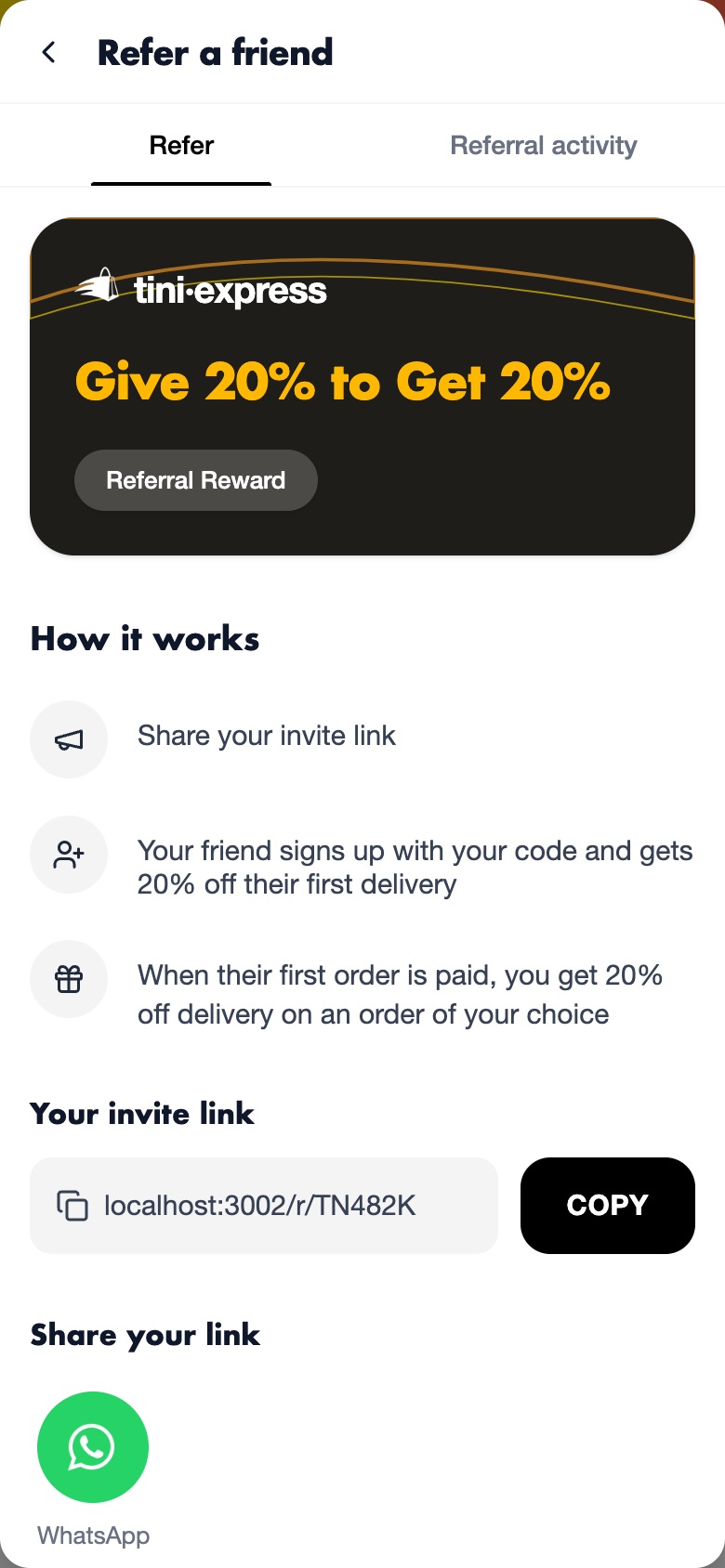
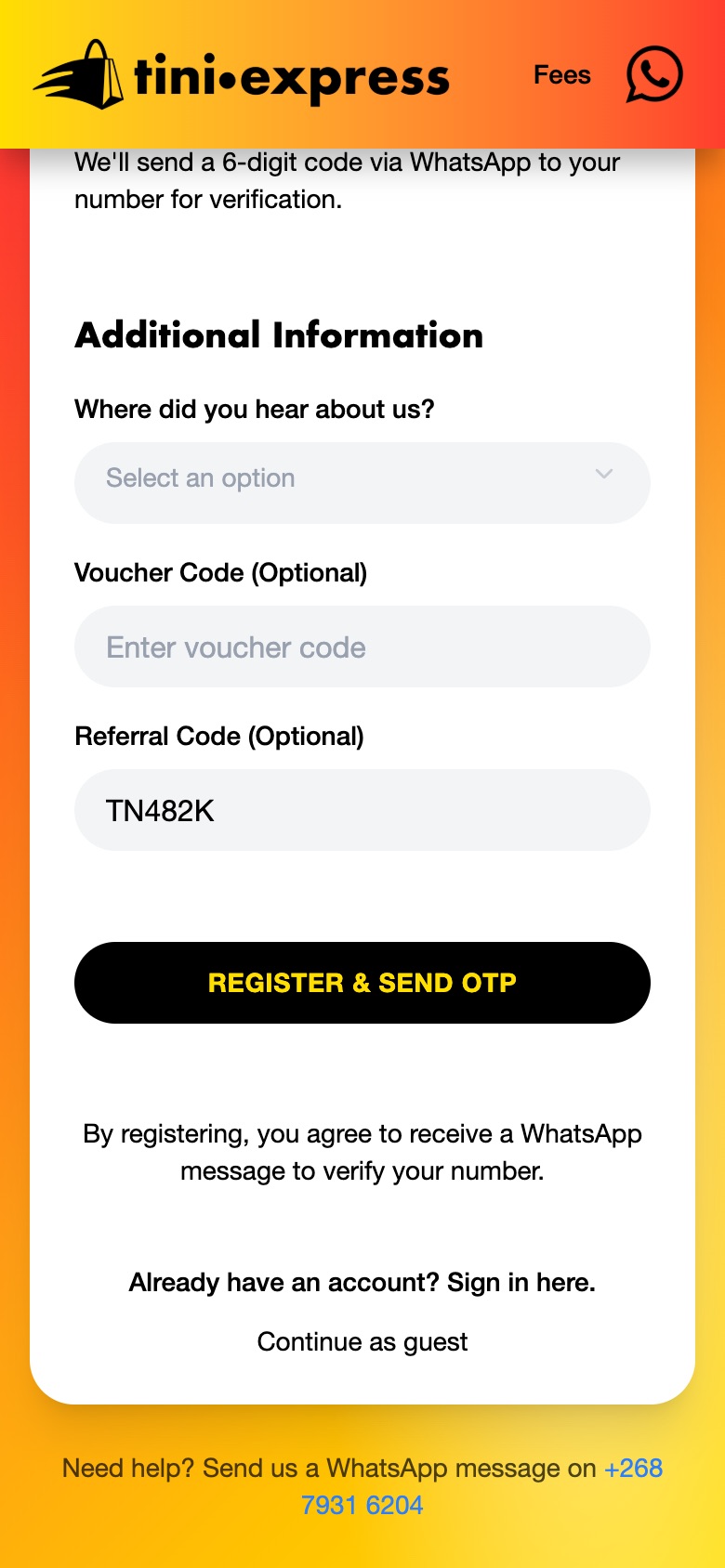
"Give 20% to Get 20%" — a two-sided referral program built into the web app. Every customer gets a personal invite link they can copy or share straight to WhatsApp. A friend who signs up with it gets 20% off their first delivery; once that first order is paid, the person who referred them earns 20% off delivery on an order of their choice (both capped at E100). Discounts live on the customer's account and are applied with a checkbox when they request a quote, so nobody has to remember or type a code.
Key Priorities
- P1 Make sharing effortless on the channel customers already use — WhatsApp — with a personal link instead of a code to copy out by hand.
- P2 Reward real customers, not sign-ups: the referrer only earns once their friend completes a first order, which protects the business from abuse.
- P3 Keep discounts transparent and in the customer's control — visible on their account, applied by checkbox, and movable to another order if plans change.
Referral Flow

Designing the Logic
- A reward that protects the margin. The discount comes off the delivery fee from our South African warehouse, not the goods, and is capped at E100 — generous enough to motivate, without putting product margins at risk.
- Reserved, then redeemed. A discount is reserved against an order as soon as the customer ticks it, and only redeemed once that order is paid — so a cancelled order releases the discount instead of burning it.
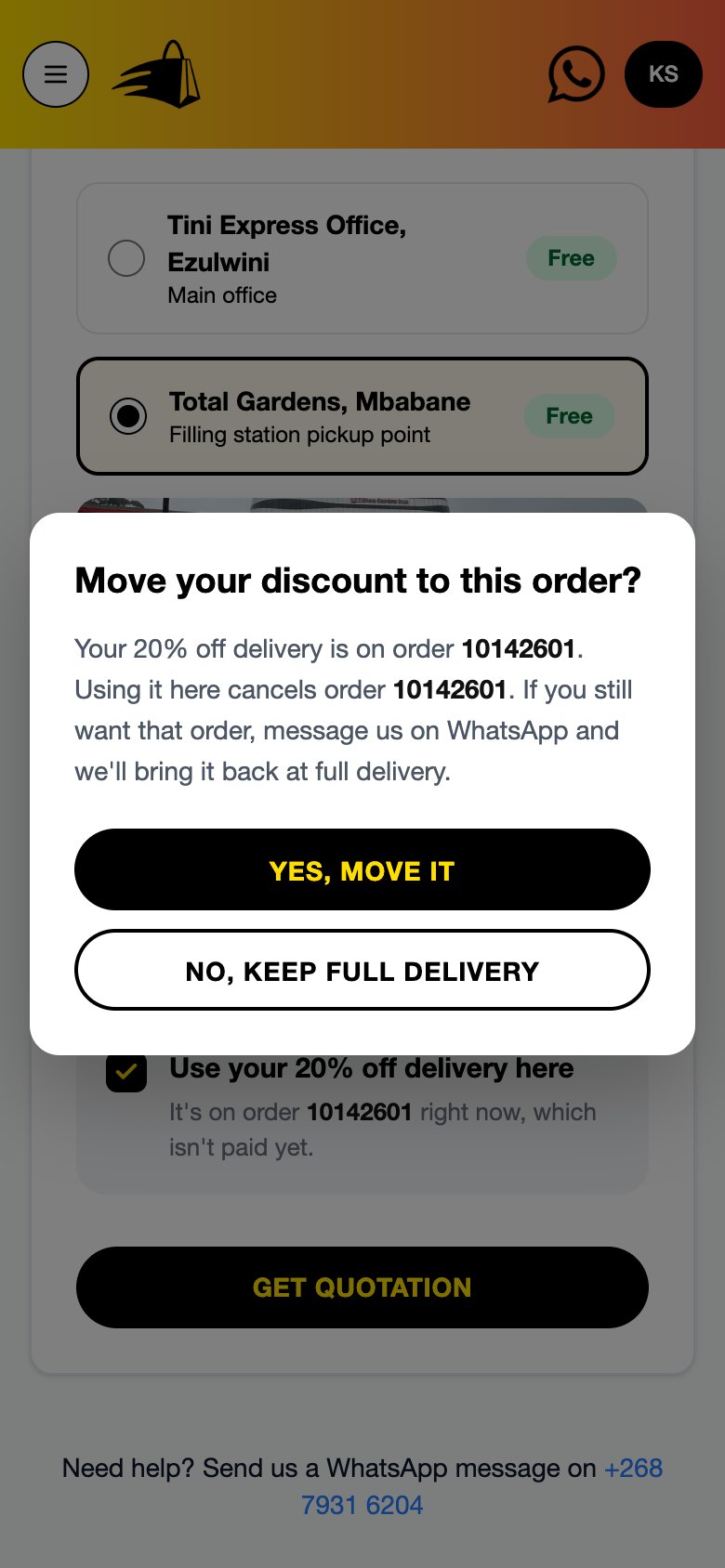
- Movable discounts, with honest consequences. If the discount sits on an order that isn't paid yet, the customer can move it themselves. The confirmation spells out that the old order will be cancelled and how to get it back, so nothing happens by surprise. Anywhere else, the card says exactly which order holds the discount and links to WhatsApp support.
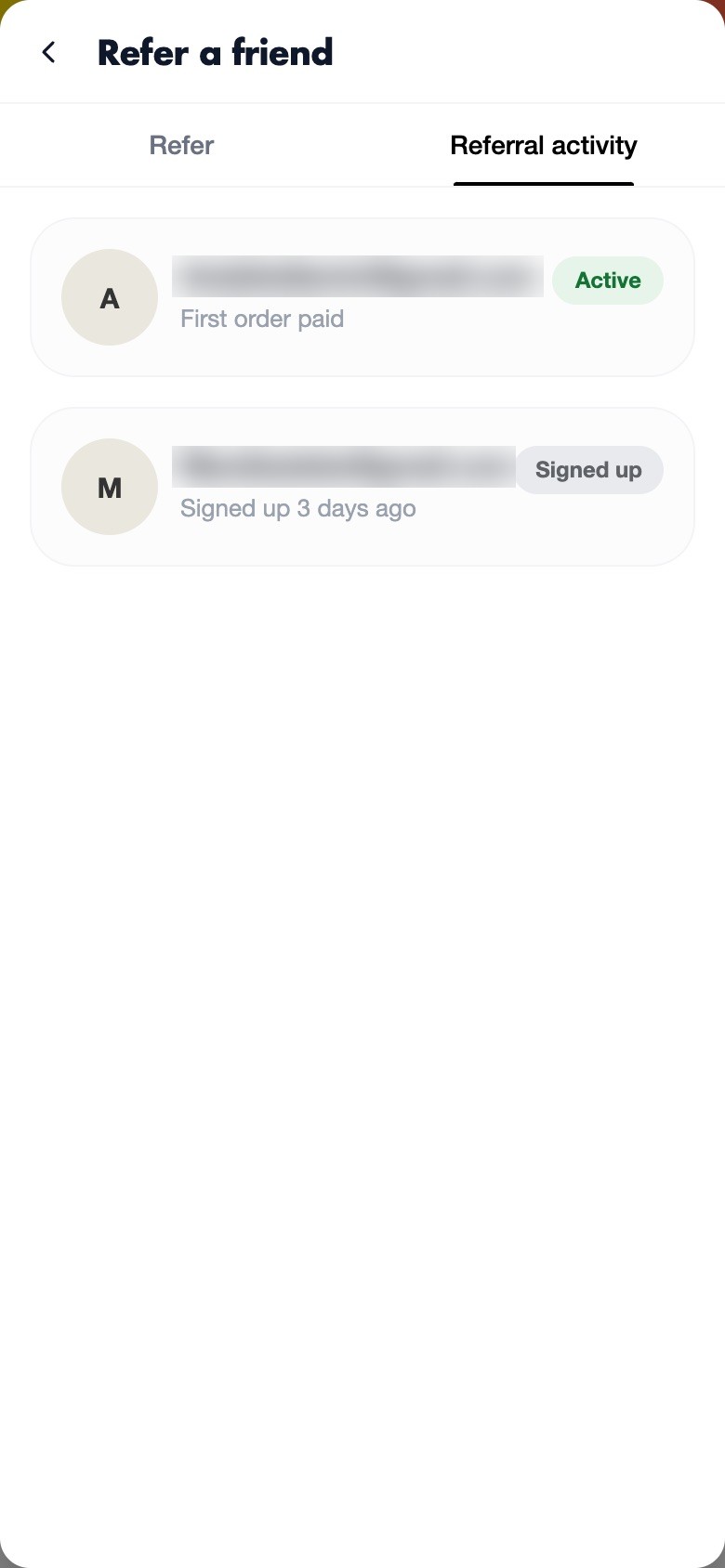
- Activity view. Referrers can see who joined through their link and whether each one is "Signed up" or "Active" (first order paid), which answers the "did it work?" question before it reaches customer service.
- Measurable from day one. I defined tracking for every step — opening the referral modal, copying and sharing the link, sign-ups, reservations, redemptions and activations — so the funnel could be read in PostHog from launch.
Final Designs
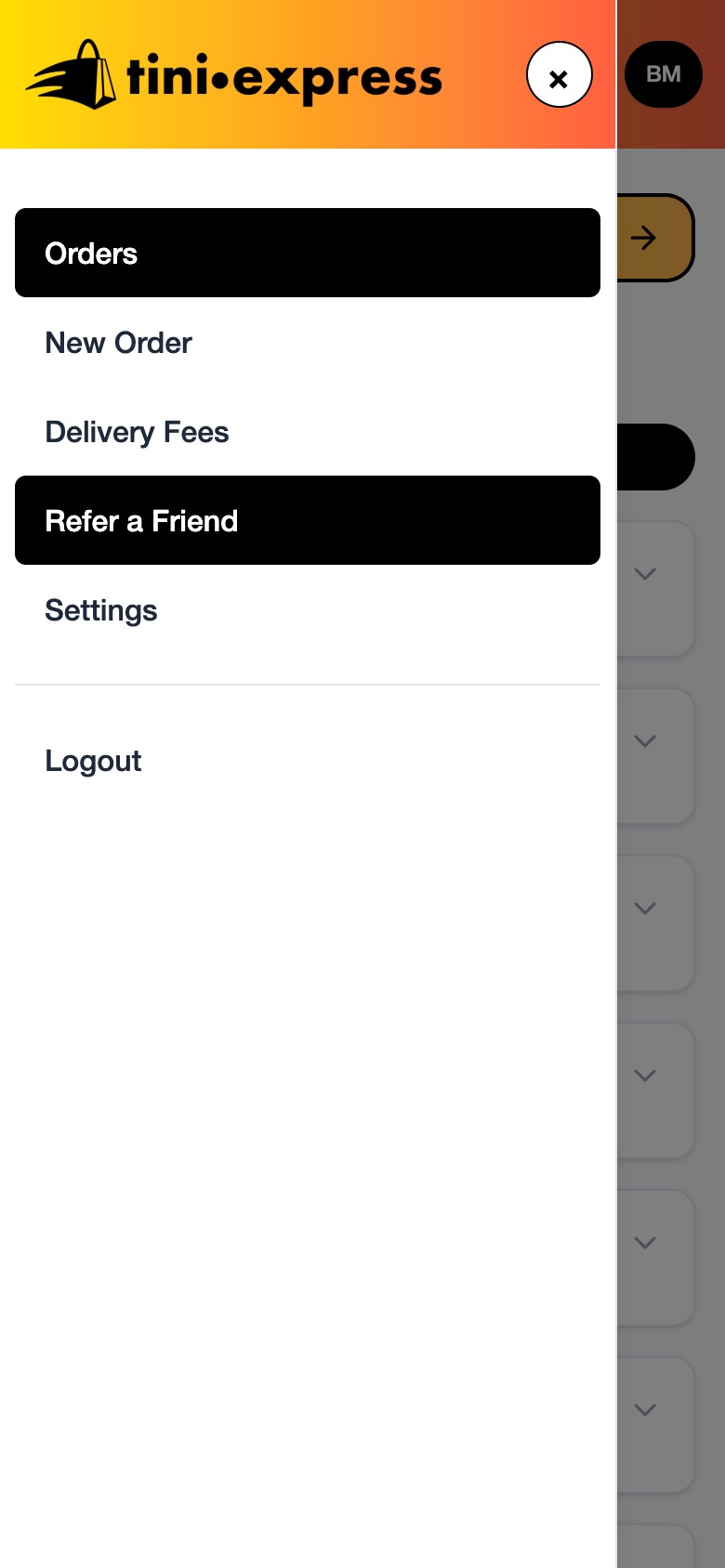
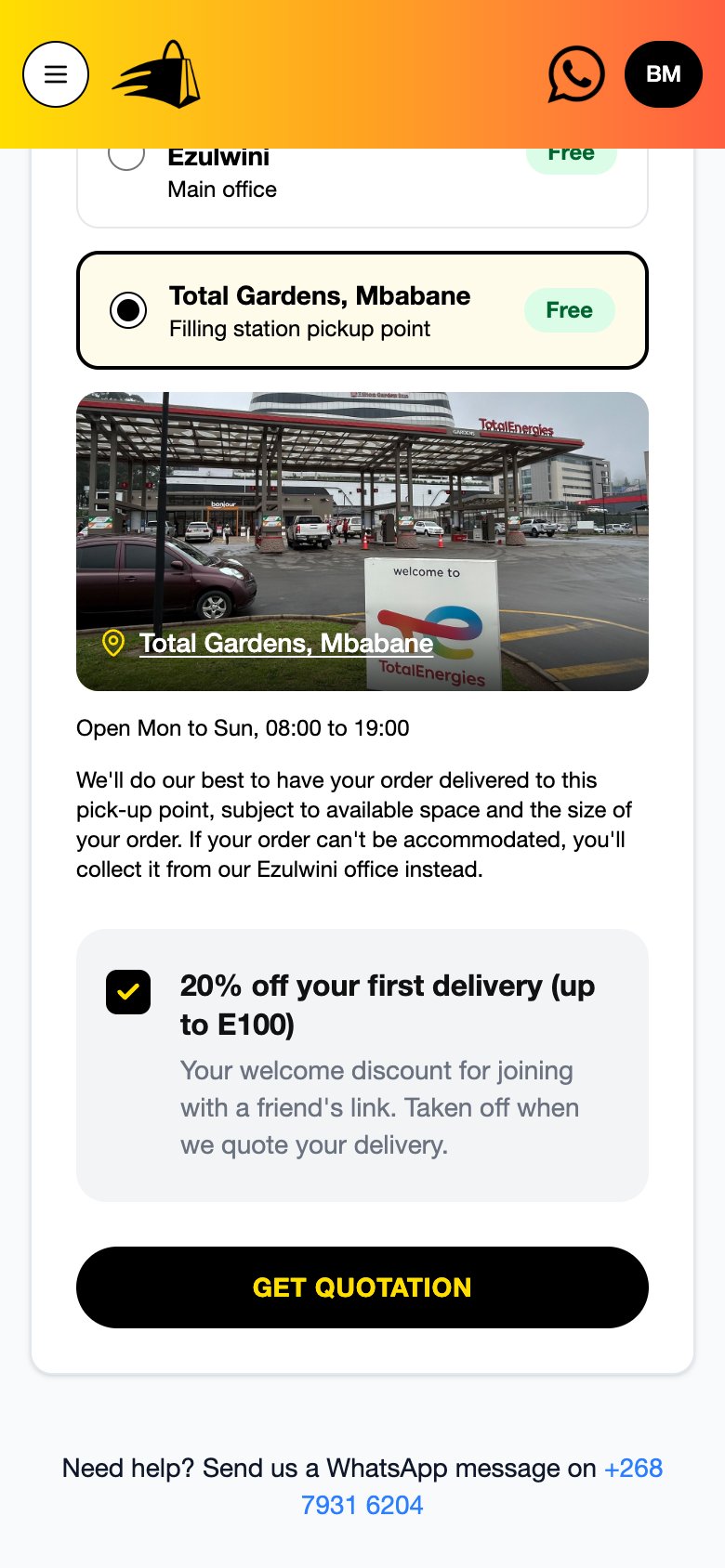
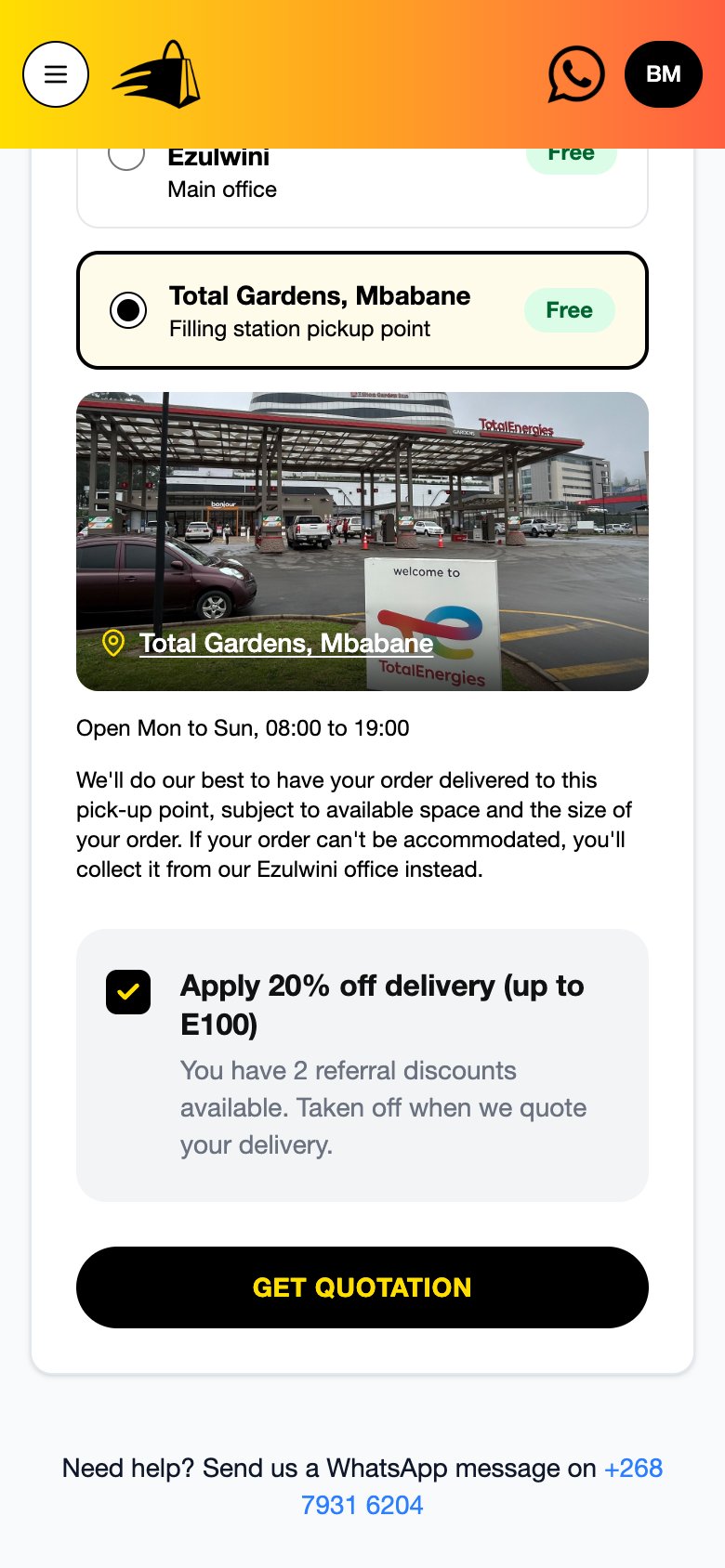
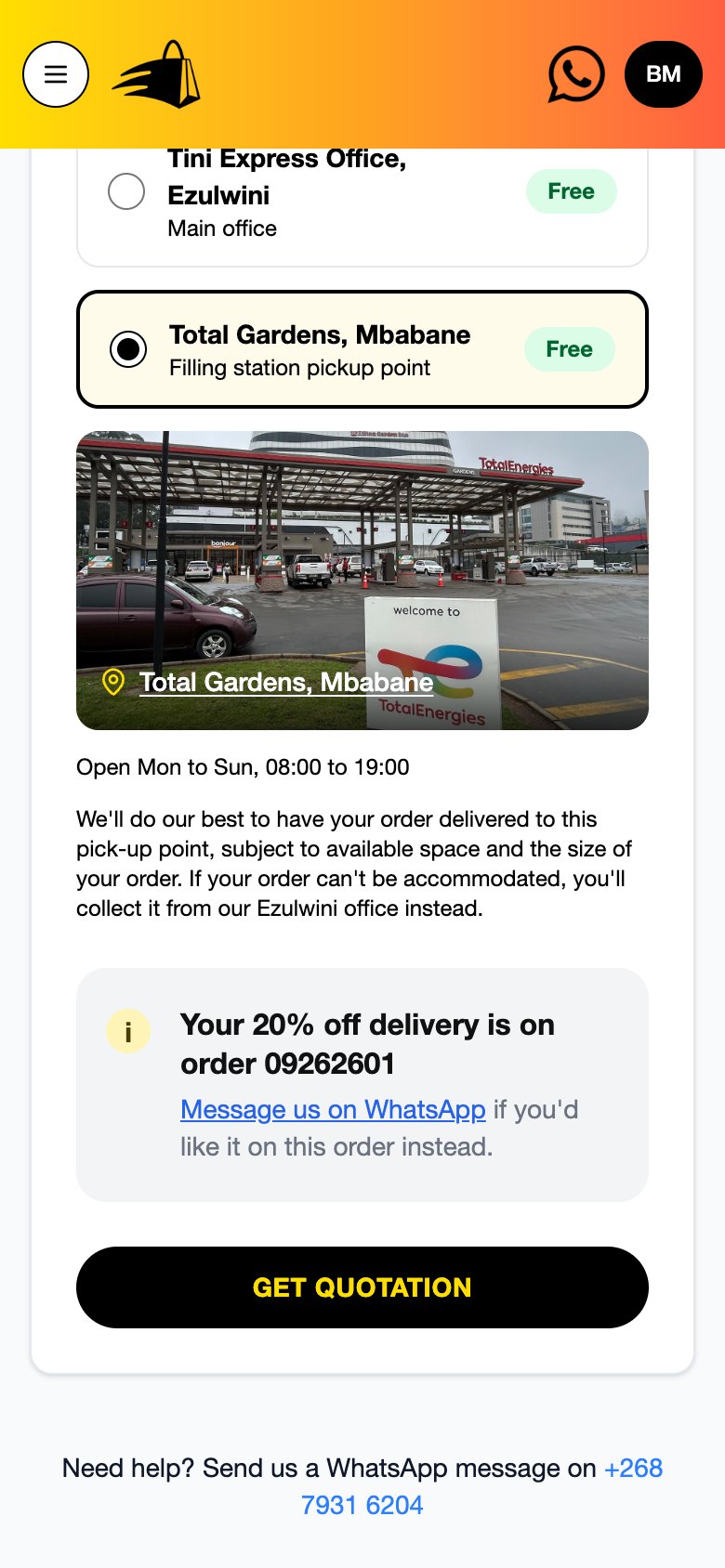
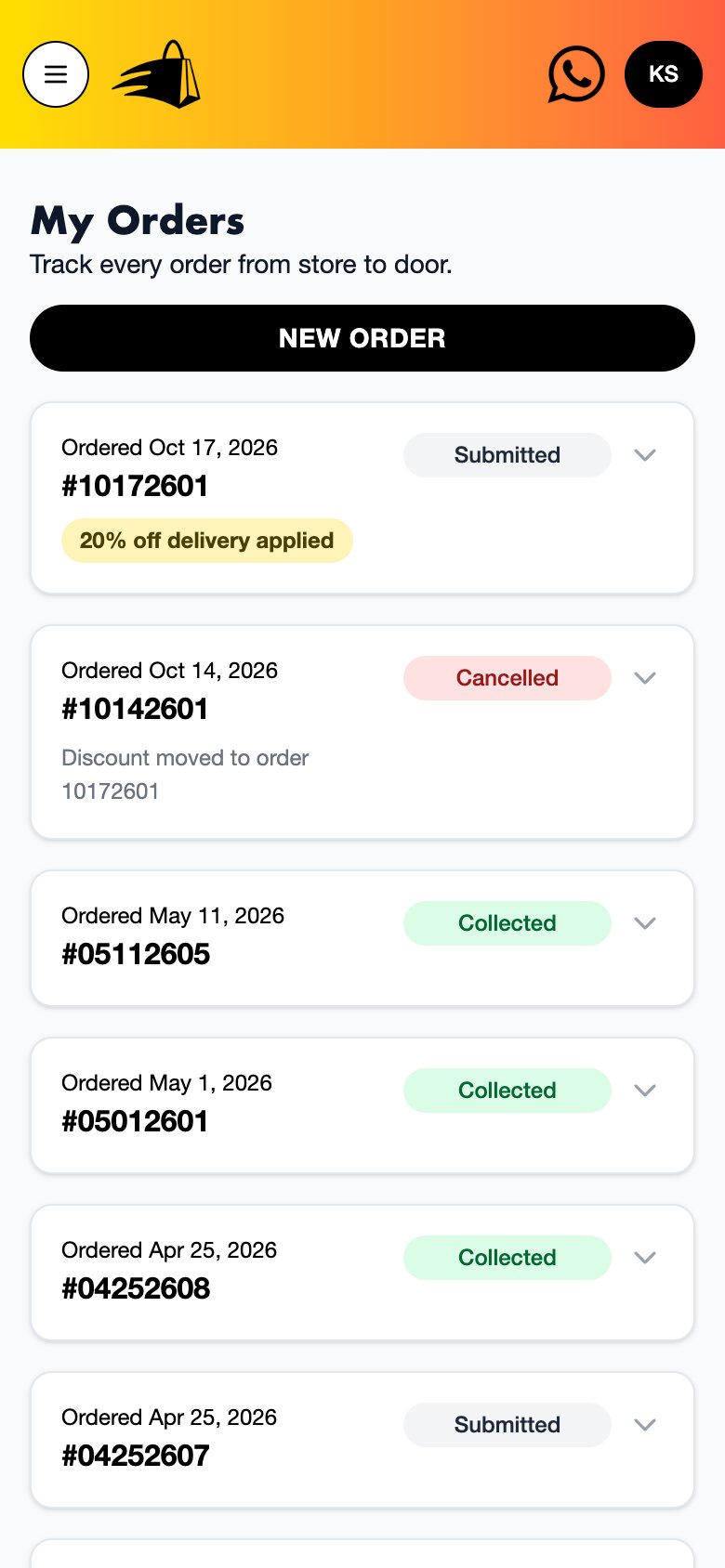
Launch & Results
The program went live in the app on 19 October 2026 and was pushed in person at the Family Fun Day on 31 October, where visitors signed up through their own referral link at our stall. In its first three and a half weeks:
Data from PostHog, 19 Oct – 12 Nov 2026. The sign-up increase also overlaps with the Family Fun Day activation and other marketing, so it isn't attributed to referrals alone.
What I Learned
The data confirmed the bet behind the design: every single tracked share went out on WhatsApp, so making that one channel frictionless mattered more than offering many. It also showed where to go next. Most referred friends sign up, but far fewer have completed a first order yet, so the next opportunity is nudging them from welcome discount to first order. About as many people dismissed the home banner as opened the referral page, which tells me its timing and placement need work. Designing the reward rules taught me that, in a referral program, the logic is the user experience — customers trust the program only when they can see exactly what they've earned and when.